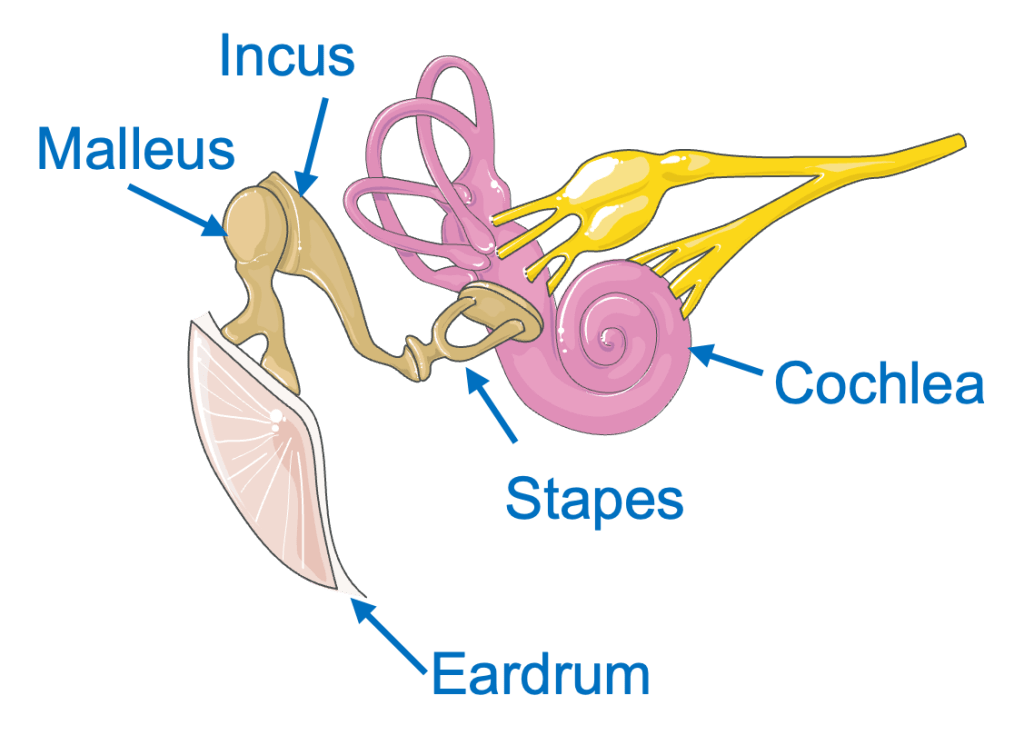
Otosclerosis is a progressive ossification of the bones of the middle ear (malleus, incus, stapes) or the inner ear (cochlea). It is due to abnormal bone remodeling and causes the three bones to have reduced movement, causing a conductive hearing loss. It is thought to effect over three million individuals in the US. Otosclerosis can be an inherited disease, or arise de novo, it is likely due to a genetic and environmental interaction but this is an active area of research.
Diagnosis
The number one diagnostic tool is an audiogram (hearing test) which will show an air-bone conduction gap. In the clinic, an ENT may use a tuning fork to asses a patient’s ability to hear through air and through bone.
Symptoms:
- Hearing loss (gradual, unilateral or bilateral)
- Tinnitus
- Dizziness
- Vertigo
Treatment
Treatment for otosclerosis depends on the patients’ preferences. The disease process is not life threatening so in some cases intervention may not be the most appropriate approach for the patient, each case is different. Hearing aids are always an alternative option that patients should consider if they do not want surgery. If surgical intervention is selected by the patient and the physician, the options include stapedotomy and stapedectomy. In a stapedectomy, the stapes bone is removed and replaced with a prosthesis. In a stapedotomy, a laser is used to remove all of the stapes, aside from the footplate and then to create a hole in the foot plate to allow for placement of the stapes prosthetic. There are currently no treatments to reverse or halt the natural progression of the disease but these interventions can restore hearing in those affected. In those with advanced disease, cochlear implantation may be warranted to restore functional hearing. Speak with your provider to understand what options are best for you.
 Adrien A. Eshraghi, MD, MSc, FACS