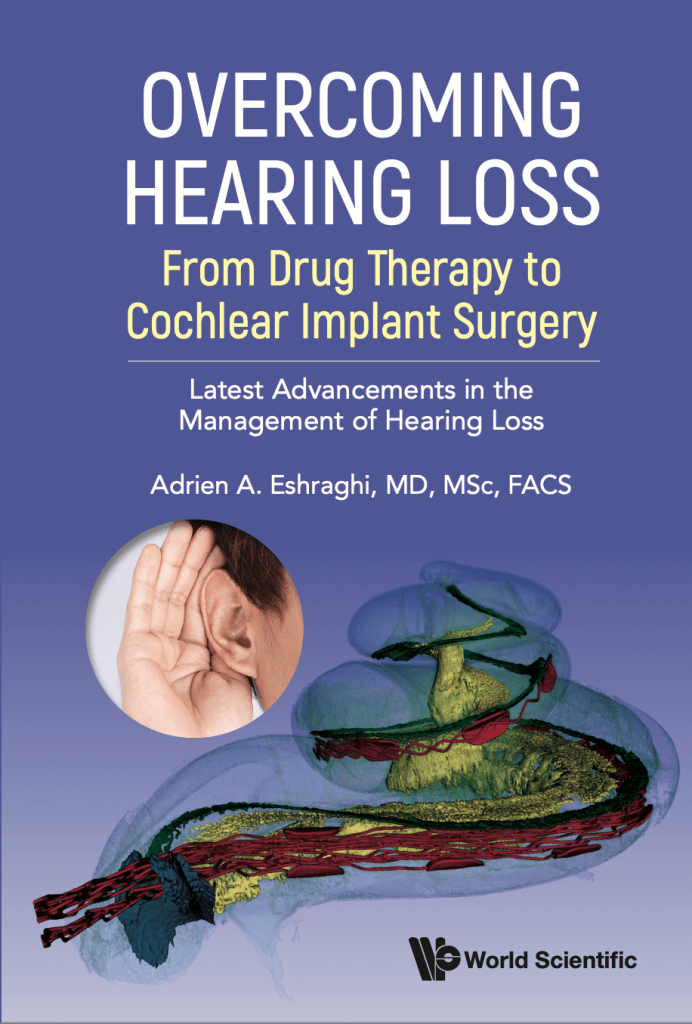
Hear and now: The latest advancements in hearing (PowerPoint Presentation)

Hearing loss affects an estimated 37.9 million people aged 12 and up in the United States1. Patients wait an average of seven years before seeking treatment for hearing loss2. Read more about hearing loss below.
Book an Appointment
The Impact of Hearing Loss
Hearing loss negatively impacts many aspects of an individual’s life. Adults may encounter difficulty with work-related tasks and socialization in noisy environments. Children with hearing loss may have difficulty in school and other activities of daily life. Symptoms of hearing loss include:
- Muffled or distorted hearing
- Ear fullness (similar to the feeling when ascending in a plane)
- Difficulty hearing conversations in loud environments
- Dizziness (vertigo)
- Ear ringing or other sounds (tinnitus)
- Ear discomfort or pain
- Itchy or irritated ear
- Discharge from the ear
Sensorineural Hearing Loss (SNHL)
Sensorineural hearing loss involves damage to the delicate nerve structures of the inner ear, or cochlea, damaging the pathway from the inner ear to the brain.
Mixed Hearing Loss
Mixed hearing loss involves components of SNHL and conductive hearing loss.
Conductive Hearing Loss
Conductive hearing loss involves damage to the structures which amplify and conduct sound from the environment through the outer and middle ear to the cochlea.
Diagnostics
To diagnose hearing loss your ENT will complete a full examination of the ears, followed by a referral to an audiologist. The audiologist will perform a series of tests to understand the cause and severity of hearing loss. The results of these tests will be used to determine the best management options for you, which will be discussed with the audiologist and your ENT.
Treatment
Hearing aids and cochlear implants are the two most commonly used hearing assistive devices, although the best treatment will be patient specific and will be discussed with your health care providers.
Hearing aids can benefit those with SNHL and conductive hearing loss. There are many different manufacturers with various models, each with their own capabilities. They are worn externally and do not require any surgical procedures to use.
Cochlear implants are surgically implanted devices which are useful in those with severe to profound hearing loss and who qualify for the procedure and who did not have any benefit from a hearing aid. The cochlear implant has two parts, an internal magnet and electrode and an external processer which work together to deliver sound to the hearing organ, the cochlea.
Auditory Training
Auditory training is the use of tools to improve listening, as it is a skill that can be trained, often used in conjunction with a hearing device. Exposure to conversation and verbal language is crucuial for this. Here are some resources that can be benificial in improving listening ability in any language:
| Exercise | Source |
| Libby – Overdrive | Free Audiobooks via the public library |
| Telephone with Confidence | https://www.cochlear.com/us/en/home/ongoing-care-and-support/rehabilitation-resources/resources-for-adults/telephone-with-confidence#spanish |
| Angel Sounds | https://angelsound.tigerspeech.com/ |
| Duolingo | Language Learning App |
| Podcasts | via Podcasts, Spotify, or online |
| YouTube videos | Caption on/ and then off; rate can also be adjusted to be slower |
| News | with or without captions |
| Audible | Amazon membership for audiobooks – patient selects preferred audiobook |
| Spotify | Music app -easy to harder lyrics; in certain songs lyrics are available to follow along |
| Apple Music | Music app -easy to harder lyrics; in certain songs lyrics are available to follow along |
| YouTube Music | Listen to song and activate captions or search the “lyric” version of the specific song |
Central Auditory Processing Disorder (CAPD)
The concept of Central Auditory Processing Disorder (CAPD), also known as Auditory Processing Disorder (APD), first emerged in the 1950s when auditory perception disorders unrelated to ear pathology needed to be defined. The American Speech-Language-Hearing Association (ASHA) describes CAPD as the brain’s ability to efficiently and effectively process auditory information. It affects the recognition, discrimination, and comprehension of sound, independent of higher-order cognitive or language deficits.
Symptoms and Diagnosis
CAPD is often suspected in children when parents notice difficulties in hearing and understanding speech, especially in noisy environments. Some individuals may even be misdiagnosed with hearing loss before receiving the correct diagnosis. However, CAPD is not limited to children—it can also affect normal-hearing adults, including middle-aged and older adults, leading to difficulties in processing conversations, especially in complex auditory environments.
CAPD can affect people of all ages, including school-aged children (2–5%), children with learning disorders (50%), normal-hearing adults, and elderly adults (75%).
The condition is diagnosed by specialized audiologists using behavioral and electrophysiological central auditory tests after ruling out other conditions such as Autism, ADHD, and hearing loss.
Causes and Associated Conditions
CAPD can result from neurological disorders, trauma, exposure to neurotoxic substances, aging-related auditory processing decline, or degenerative conditions. It often coexists with or mimics other disorders affecting listening, learning, and communication, making accurate diagnosis crucial.
Treatment Approaches
Treatment for CAPD is individualized, deficit-specific, and multidisciplinary. Strategies include:
• Fast-Forward Technique: A specialized auditory training program designed to enhance sound processing and language comprehension.
• Environmental Modifications: Minimizing background noise, using FM systems, or enhancing room acoustics to improve auditory clarity.
• Auditory Training Programs: Exercises that help strengthen the brain’s ability to process and interpret sounds.
• Compensatory Strategies: Teaching patients how to improve listening skills, focus attention, and utilize visual cues to enhance communication.
• Neuroplasticity-Based Training: Programs designed to retrain the brain’s auditory processing pathways, especially in adults experiencing CAPD-related difficulties.
Improving Quality of Life
With early diagnosis and targeted intervention, individuals with CAPD—including children, adults, and the elderly—can significantly improve their listening, learning, and communication skills. As research advances, more effective treatment approaches continue to emerge, offering better outcomes and an improved quality of life for those affected.
References
- 1. World Report on Hearing. World Health Organization. Accessed 12/1/2023.
- 2. Hearing Loss Facts and Statistics. Hearing Loss Association of America. Accessed 12/1/2023.
 Adrien A. Eshraghi, MD, MSc, FACS