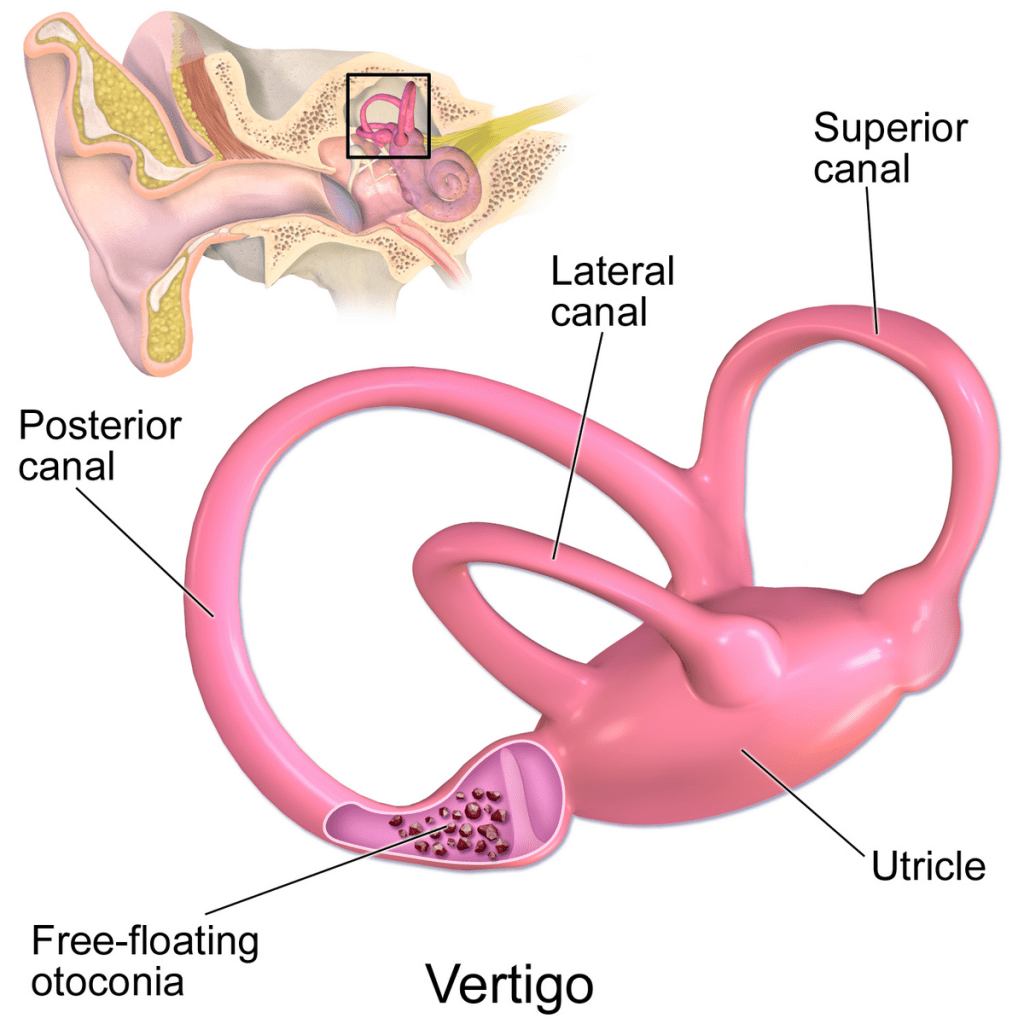
Vertigo is defined as a sensation of movement (spinning) in the absence of movement, either the patient feels that they are moving or that the environment is moving around them. Dizziness is a general feeling of unsteadiness. Although they sound similar, vertigo is a specific type of dizziness. Vertigo generally lasts anywhere from a few seconds to a few hours, and each episode is generally self-limiting.
Causes:
There are many causes of Dizziness and Vertigo some of the more common causes include:
- Benign Postural Paroxysmal Vertigo (BPPV)
- Manières disease
- Vestibular dysfunction
- Vestibular neuritis
- Migraine (Vestibular migraine)
- Multiple sclerosis
- Drug side effect
- Tumors (acoustic neuroma, endolymphatic sac tumor, meningioma)
- Stroke
- Head trauma
- Persistent postural perceptual dizziness (PPPD) – vested rehab and psychological support, sometimes medication (SSRI)
Diagnosis:
Diagnosis of dizziness and vertigo is generally based on clinical evaluation. The clinician will listen to symptoms and characteristics of the episodes to determine the underlying cause. In the office, physical exam including neurological exam, looking for nystagmus or other signs that explore neurological, inner ear (vestibular) or ocular abnormalities . Maneuvers such as the Dix-Hallpike to delineate the possible cause of vertigo is performed. Further diagnostic evaluation may include hearing test, imaging (CT, MRI, CTA) or vestibular function testing.
Benign Postural Paroxysmal Vertigo (BPPV)
BPPV is a disorder caused by the displacement of small crystals, known as otoconia, in the vestibular apparatus of the inner ear. These otoconia are essential for maintaining balance by deflecting hair cells during head or body movement, sending signals to the brain that there is motion. When these crystals are displaced from their normal location, they can create a false sensation of movement, resulting in vertigo. Diagnosis of BPPV is typically performed in-office using the Dix-Hallpike Test, which helps confirm the condition. BPPV most commonly involves the posterior canal, with the lateral canal being less frequently affected.
Treatment often begins with in-office maneuvers such as the Epley Maneuver or the Semon Maneuver, both of which aim to reposition the displaced otoconia and alleviate symptoms. After these procedures, specific recommendations are provided to optimize recovery. Patients are advised to sleep in a semi-sitting position (45°) with their head propped up on several pillows for a few hours. Additionally, they should avoid lying down, bending over, or looking up or down for 48 hours to prevent further displacement of the otoconia.
For patients experiencing persistent symptoms, vestibular rehabilitation may be recommended to improve balance and address ongoing issues. At-home exercises, such as the Brandt-Daroff Exercises, can also help alleviate symptoms and are particularly useful when vertigo persists despite in-office treatments.
If symptoms continue to recur, patients should consult their healthcare provider to discuss additional options, including advanced rehabilitation techniques or further evaluation. This comprehensive approach ensures effective management and relief for individuals with BPPV.
Vestibular Migraine
This is a neurological condition which involves vertigo, imbalance, nausea, vomiting, with or without headache. Although it is characterized as a migraine, it may not always be present with the symptom of headache. The cause is not completely understood and may be manage by trigger avoidance and migraine management including medication and lifestyle management.
Triggers:
Any environmental, dietary, or physiologic factor that provoke migraine activity in the brain.
- Environmental: strong odors, bright lights, loud noise, changes in weather, TMJ pain, sinus inflammation
- Food: alcohol, aged cheeses, bread, yogurt, caffeine, chocolate, MSG, nitrates
- Dietary effects can be immediate or delayed.
- Typically, patient should start with a diet that eliminates only the most common migraine triggers. They should follow the diet for 6-10 weeks before see results.
- Physiologic: stress, fatigue, sleep (too much/too little), hunger, exercise, pain, hormonal changes.
Vestibular Neuritis
Vestibular neuritis, stems from inflammation of the inner ear. The cause of the inflammation may be idiopathic, or due to infection, autoimmune disease, stress, or other substances. It generally presents as altered hearing, tinnitus, vertigo/dizziness, and may include nausea and vomiting. The treatment options include watchful waiting, steroids (oral or local), antiemetics, and vestibular rehabilitation.
Treatment:
Treatment of vertigo is dependent on the cause of the symptom. Treatment may include lifestyle modification (diet, stress reduction, trigger avoidance…), medications, vestibular therapy, or surgical correction of the underlying cause. The physician will give their recommendations after a thorough evaluation and exam for your specific cause of vertigo.
 Adrien A. Eshraghi, MD, MSc, FACS